
Blog / Guides
Flooring for apartments: porcelain tile, ceramic, or vinyl — which to choose and what it costs
Real differences between the three most common flooring materials used in finishing projects in Medellín and Bello.
September 11, 2026
What's the real difference between porcelain tile, ceramic, and vinyl?
Porcelain tile is denser, handles moisture and wear better, and comes in larger formats with fewer visible grout lines — it's the material behind most Plus and Premium finishes. Ceramic tile is more affordable and lighter, with solid performance for standard residential use, typical of the Essential level. Vinyl (laminate or SPC flooring) mimics wood at a lower cost than real hardwood, installs faster, and is a common choice for bedrooms.
Which one performs best in which space?
In wet zones (bathrooms, kitchen, laundry area), porcelain tile or ceramic is the right call — vinyl isn't built for constant water exposure. In social areas (living and dining rooms), large-format porcelain tile gives a more continuous, higher-end feel. In bedrooms, vinyl is a valid option and warmer underfoot than ceramic.
How does your flooring choice relate to your finish level?
Flooring type is one of the variables that determines whether your apartment lands at Essential, Plus, or Premium — the per-m² price of each level already accounts for the typical flooring material of that category. You can see the exact range for your case in the online quote simulator.
What should you check before flooring gets installed?
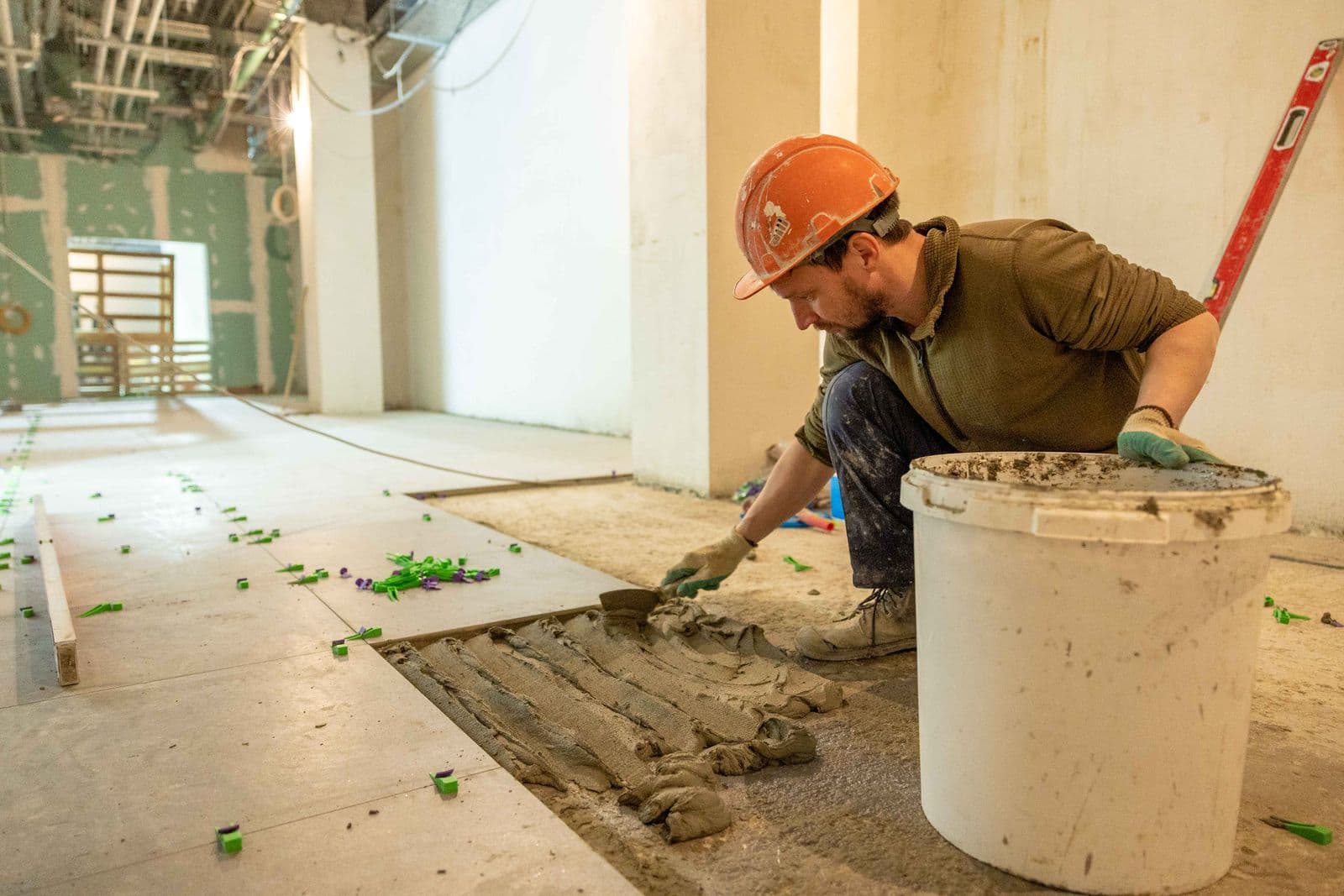
That the slab is level before tile gets set — an uneven floor ends up producing uneven or cracked pieces over time. Flooring goes in after bathroom and kitchen tiling, and before final paint — see the full sequence in our guide to the correct order of finishes.
How does the whole process work with architect Yainis Ávila?
It all starts with the online quote simulator: in minutes you get a price range and an estimated timeline in weeks, with no site visit needed. If you decide to move forward, a diagnostic visit gets scheduled and, if the project calls for it, the complete project study (detailed budget, updated floor plans, 3D modeling, and photorealistic renders).
Before any construction starts, everything is put in writing: a fixed price, a timeline in weeks, and a minimum one-year warranty. During execution, you follow real progress through the Client Zone, with no need to be on-site every day.